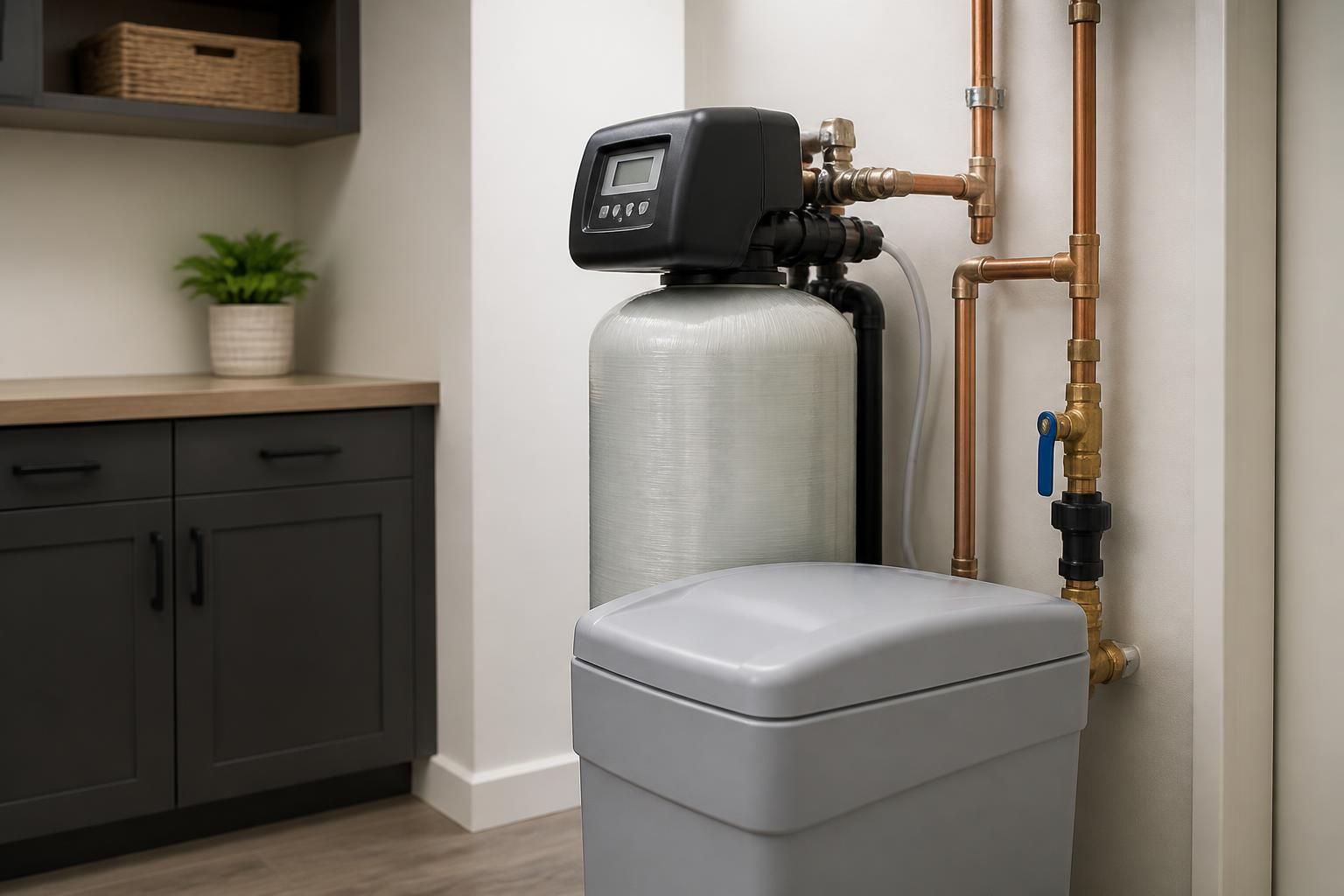
White spots on dishes, scale around faucets, or laundry that feels stiff can mean your water softener is no longer treating water as expected. A leaking tank, unusual cycling, or a unit that will not regenerate can also interrupt the system. If a softener leak is causing active water damage, contact our emergency plumbing team for urgent help. Whether the fix is a repair or a new installation, the first step is finding out what changed.
Roy's Rooter provides water softener repair and installation in Maineville, Ohio, and nearby communities. We check the equipment and its plumbing connections, explain the practical options, and help you decide whether to restore the current softener or install a replacement that fits your home.
A softener that runs is not necessarily softening water. The cause may be as simple as a salt bridge or as involved as a worn valve or a system that is no longer a good fit for the home. We focus on the symptoms, the condition of the equipment, and the connections around it before recommending work.
If repair makes sense, we explain what needs attention. If the unit is failing repeatedly or cannot be repaired practically, we can discuss a new water softener installation instead of leaving you with the same hard-water problem.
Problems often show up at household fixtures before the unit stops completely. Watch for changes in both the water and the softener itself:
These symptoms do not always mean you need a new unit. An inspection can help separate a repairable issue from a system that would be better replaced.
We start with the change you noticed and examine the softener and its connected plumbing. That can include the salt and brine tank, control settings, valves, drain and brine lines, and visible fittings. Checking the likely causes first helps avoid replacing parts based only on a symptom.
A hardened salt bridge or salt buildup can keep the system from making the brine it needs. A restricted brine or drain line can interfere with regeneration even when the controls appear to be working. We look for these issues before recommending a larger repair.
Worn seals, sticking valves, control problems, and leaking connections can affect how water moves through the softener. We identify what is failing, explain whether a repair is practical, and review the next step with you. If the resin or another major component has deteriorated, we discuss whether repairing it still makes sense.
Not every malfunction calls for replacement. A repair may be the straightforward choice when the problem is isolated and the rest of the system is in workable condition. Installation becomes worth considering when a unit has recurring faults, significant wear, or a repair that would not address the underlying problem.
We explain the condition of your current setup so you can make an informed choice between water softener repair and replacement.
For a first-time installation or a replacement, the setup needs to fit the home's plumbing and the space available. We review the existing connections and discuss the household's needs before moving ahead with a new unit.
We look at access, the water supply, drainage, and the space available for the softener and brine tank.
We explain the proposed unit placement and any connection work needed before installation begins.
We set the equipment, connect the appropriate lines, and check the fittings for leaks.
We review the system's operation and talk through the settings and salt upkeep you should know about.
If we are replacing an existing softener, we also account for the old unit and its connections in the installation plan.
Tell us when the hard-water signs began and whether you have noticed leaks, unusual salt use, or changes in the cycle. We inspect the system, explain what we find, and discuss repair or installation options before work moves forward. Roy's Rooter offers free estimates, no trip charges, and transparent pricing so you can understand the proposed work.
We also check for nearby plumbing concerns that may affect the softener. If the source of a leak is unclear, our leak detection service can help identify it; if a water line needs separate attention, we will explain that rather than treating the softener as the cause of every symptom.
We serve homeowners in Maineville and nearby communities across Warren, Clermont, and Hamilton Counties, including Lebanon, Loveland, Mason, South Lebanon, Milford, Deerfield Township, Blue Ash, Landen, and Symmes Township. If hard-water signs have returned or you are planning to install a water softener, contact us to discuss your setup and location.
The system may be cycling without treating water effectively. A salt bridge, blocked brine line, valve problem, incorrect setting, or worn resin can all be involved. Inspecting the unit helps identify the cause.
Yes. A hard crust can form above the water in the brine tank and prevent salt from dissolving as needed. The softener may appear to run while hard-water symptoms return.
Often it can, especially when the problem is limited to a serviceable part or connection. The condition of the unit and the nature of the fault determine whether repair is the practical choice.
The installer reviews the available space and plumbing, places and connects the unit, checks for leaks, and goes over basic operation. A replacement also involves addressing the old unit and its connections.
Household water use, the number of people in the home, and the water conditions all matter. We discuss your situation and the existing plumbing before recommending an installation approach.
Sometimes existing connections can be used, but their condition and layout need to be checked first. A replacement may require changes to the supply, drain, or placement to fit the new equipment.
For water softener repair and installation in Maineville, Ohio, call Roy's Rooter at +15132026990 or email roysrooter@gmail.com. Tell us what you are noticing, and we can help you take the next step toward a repair or a new installation.

Get Help Now
Tell us what is going on, and we will help you with the next step. From clogged drains and leaking fixtures to water heater problems and sewer concerns, Roy's Rooter is ready to help with clear pricing and responsive service.