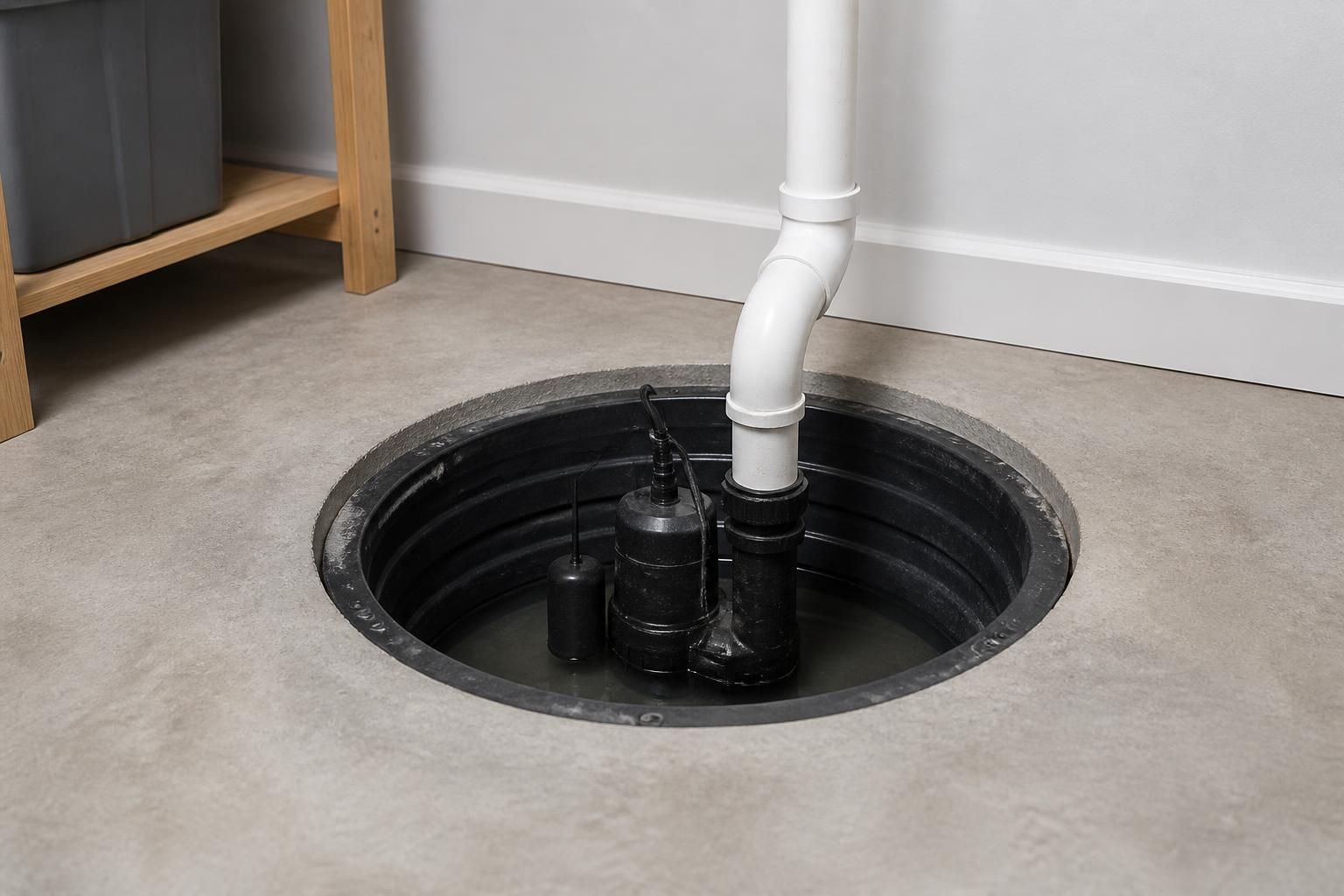
A sump pump may run for long stretches when rain or groundwater is sending water into the pit. But if it keeps running when the water level is low, or starts and stops every few seconds, something may need attention. The sound alone does not identify the cause, so a few safe observations can help a plumber evaluate the system.
Continuous running and frequent cycling are different patterns. Notice when the pump runs, what the water level appears to be from a safe, dry location, and whether the pattern changes with heavy rain. Do not touch the pump, float, wiring, or water to investigate.
Continuous running or frequent cycling?
Continuous running means the pump stays on for a long time or does not seem to shut off. During heavy water inflow, extended operation can reflect the amount of water entering the pit. If the pit appears nearly empty but the motor continues running, a float or control problem, restricted or ineffective discharge, a check-valve issue, inadequate pump capacity, or equipment trouble may be involved.
Frequent cycling means the pump starts and stops repeatedly over short intervals. Water flowing back through a check valve, float-switch behavior, basin conditions, or a high inflow can contribute. Manufacturer troubleshooting guidance lists several of these as possible causes, but the exact system and symptoms matter. A sound or water level by itself is not a diagnosis. Liberty Pumps’ sump pump FAQs and Zoeller’s product support guidance describe overlapping troubleshooting possibilities.
What you notice and what to do
| What you notice | Possible explanation | Recommended next step |
|---|---|---|
| The pump runs during heavy rain or high water inflow | Incoming water may be keeping the pump active; capacity and discharge conditions can also matter. | Note when it started and whether the water level appears to rise, fall, or stay similar. Request evaluation if it does not ease as inflow slows. |
| The pit appears nearly empty, but the pump keeps running | A float or control, discharge, check valve, pump capacity, or equipment problem may be involved. | Do not touch or disconnect equipment. Contact a plumber to assess it. |
| The pump starts and stops every few seconds | Short cycling may relate to float behavior, return flow through a check valve, basin conditions, or incoming water. | Note roughly how often it cycles and whether it happens during or after rain. |
| You hear the pump, but water does not seem to leave the pit | A discharge restriction, check-valve issue, or pump problem is among the possibilities. | Stay clear of the equipment and arrange professional evaluation, especially if water is rising. |
| The pump is unusually noisy or behaves differently than before | Wear, a control issue, or another equipment or system problem may be present. | Describe the sound and when the change began. Avoid opening or handling the pump. |
Safe observations to share
From a safe, dry place, you can note whether the pump seems to run continuously or cycle, how long the pattern has been happening, whether it began during heavy rain, and whether the water level looks high, falling, or nearly empty. If you can observe the discharge outlet without going near hazards, note whether water appears to be coming out. Do not enter standing water, approach wet electrical equipment, remove covers, move the float, or test the pump yourself.
When to arrange professional evaluation
Contact a plumber if the pump runs without stopping when the pit appears low, cycles unusually often, runs but does not appear to remove water, makes a new or concerning noise, or if the water level is rising. If water is entering the home, keep away from water near electrical equipment and seek appropriate help. Roy’s Rooter offers sump pump repair and installation. For urgent plumbing concerns, see Emergency Plumbing.
Repair or replacement?
Constant running does not automatically mean the pump needs replacement. A professional can assess the pump, controls, float, discharge path, check valve, and whether the pump is suited to the water demand. If the cause is limited to a repairable component, repair may make sense. Replacement may be considered when the pump or key components are failing, the equipment is in poor condition, or a repair would not address the underlying capacity or system issue. The recommendation should follow an evaluation, not the symptom alone.
Frequently asked questions
Is it normal for a sump pump to run during heavy rain?
It can run more often or for longer while water is entering the pit. If it cannot keep up, runs continuously after conditions ease, or water rises, have the system assessed.
Can a check valve make the pump cycle again?
A check valve helps limit water returning through the discharge line after pumping. If it is not working properly, returning water may contribute to another cycle. Inspection is needed to confirm whether that is happening.
Should I unplug the pump if it will not stop?
Do not unplug a working pump while water may be flowing into the pit. If it is running continuously or water is rising, keep away from electrical hazards and contact a plumber for guidance.
Does constant running mean my pump is too small?
Not necessarily. High inflow can keep a properly operating pump busy, while discharge, controls, check-valve, or equipment problems can look similar. A professional evaluation can determine whether pump capacity is appropriate.
What should I tell the plumber when I call?
Share when the behavior began, whether it runs continuously or cycles, what the water level appears to be, whether it coincides with rain, any unusual sounds, and whether water seems to be leaving the discharge outlet. Mention any visible water nearby without approaching electrical hazards.
Request sump pump service in Maineville
If your sump pump is running constantly, cycling repeatedly, or not moving water as expected, Roy’s Rooter can evaluate the system and discuss repair or replacement options. We serve Maineville and nearby Ohio communities, with free estimates and no trip charges. More Plumbing Guides